
All Articles
The challenges of HR data transformation—and how to overcome them
Greg Crawley
March 4, 2025

HR data is one of the most valuable assets within an organization, yet transforming this data into actionable insights is riddled with challenges. Payroll integration nightmares, compliance risks... HR data transformation can quickly become a costly disaster if not handled properly. The stakes are high, with financial losses, operational disruptions, and reputational damage looming over poorly executed projects. Let's look at the common pitfalls of HR data transformation, real-world failures, and how Roboshift can help organizations turn messy, fragmented HR data into a strategic advantage.
Why HR data transformation can go horribly wrong
Data transformation in HR isn’t just a technical project but a high-stakes operation that can either streamline or wreck processes. Many organizations have learned this the hard way. Consider these cautionary tales:
- UK NHS payroll system failure (2016): Poor data quality and insufficient testing led to hundreds of employees being underpaid—or not paid at all—costing millions to fix.
- RSPCA Queensland underpayments (2017-2023): Between February 2017 and June 2023, RSPCA Queensland underpaid approximately 1,130 current and former employees a total of $2.8 million. The underpayments were attributed to a complex wage award system and an outdated payroll system lacking proper functionality.
- UK Office for National Statistics (ONS) data collection failures (2023-2024): The ONS faced challenges in producing reliable employment data due to under-investment and over-optimism in implementing a new data collection system. The transition from an interviewer-led survey to an online questionnaire was poorly managed, leading to unreliable unemployment figures for over a year. This situation affected policymakers and investors who rely on accurate labor market data.
These cases prove one thing: HR data transformation isn’t just about moving data from point A to point B. It requires precision, strategy, and the right tools to avoid catastrophic results.
Why HR data transformation is so challenging
HR departments are sitting on a goldmine of data—employee records, payroll details, performance analytics, recruitment insights, and more. But turning this raw information into actionable insights and transforming the data in between systems? That’s another story. Here are the biggest hurdles:
1. Data complexity and fragmentation
HR data is scattered across various systems—HRIS, payroll platforms, recruiting software, and performance tools—each with its own format and structure. Unifying this data without losing crucial details is a monumental challenge.
2. Data quality issues
Incomplete, inconsistent, or outdated data leads to flawed insights. Duplicate employee records, mismatched job titles, or missing fields can skew analytics and cause serious decision-making errors.
3. Regulatory compliance risks
With regulations like GDPR and CCPA, mishandling HR data can lead to legal trouble. Ensuring compliance—such as anonymizing sensitive information during transformation—adds another layer of complexity.
4. Time-consuming ETL processes
Traditional extract, transform, load (ETL) processes are manual, labor-intensive, and prone to errors. HR teams spend countless hours cleaning and restructuring data instead of focusing on strategic priorities.
5. Lack of technical expertise
HR professionals aren’t data engineers. Managing complex data transformations often requires IT support or expensive consultants, making the process slow and costly.
Real-world HR data transformation struggles
Here are a few examples of data transformation issues that any HR department can encounter, and that WILL turn into a nightmare without proper data transformation tools and planning:
- Merging employee data after an acquisition: Consolidating payroll systems, job hierarchies, and benefits structures.
- Generating compliance reports: Anonymizing employee data for GDPR compliance and related data mapping.
- Analyzing employee turnover: Identifying trends that requires merging exit interviews, performance reviews, and recruitment data—often stored in different formats and missing key details.
Enter Roboshift: The smart way to transform HR data
Roboshift is an AI-powered data transformation platform designed specifically to tackle HR’s toughest data challenges. By combining natural language processing (NLP) with advanced automation, Roboshift makes ETL seamless, enabling HR teams to focus on strategy rather than spreadsheets.
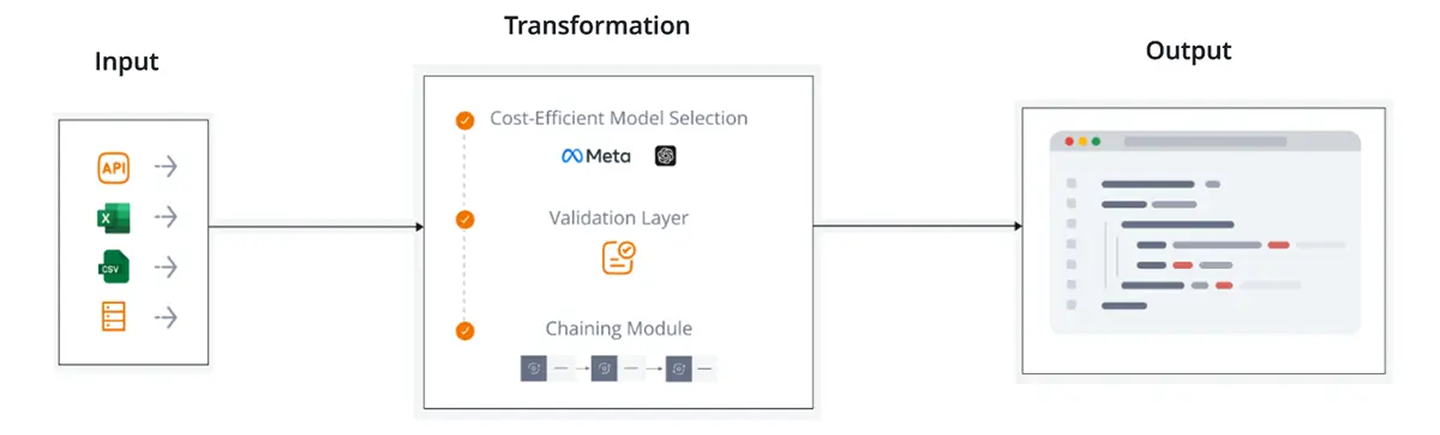
Key features and benefits of Roboshift
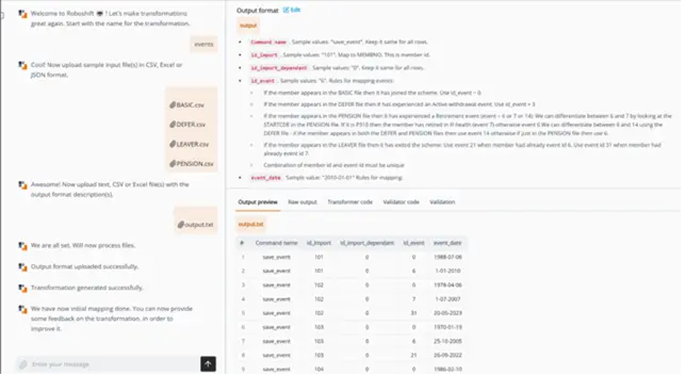
1. Natural language interface (NLI)
HR professionals can transform data using simple natural language commands instead of complex SQL queries. For example:
“Extract employee data from column A, B and D and transform into X.”
Benefit: No technical expertise required—data transformation becomes accessible to everyone.
2. Automated data mapping
Roboshift intelligently maps data fields across different systems, even when naming conventions differ. (e.g., recognizing that employee ID in one system equals employee number in another.)
Benefit: Eliminates manual mapping errors and reduces workload.
3. AI-powered data quality checks
Roboshift validates data in real-time, flagging duplicates, inconsistencies, or missing fields before loading them into the target system.
Benefit: High-quality, reliable data for accurate insights.
4. Faster decision-making
By automating the entire ETL process, HR teams can generate reports and insights in hours instead of weeks.
Benefit: Accelerates decision-making and improves operational efficiency.
5. Scalable and secure
Roboshift can handle large volumes of data securely, with built-in encryption and access controls.
Benefit: Ensures data security and scales with your business.
Why Roboshift is a game-changer for HR data transformation
Roboshift is simply the future of HR data transformation. It empowers HR teams to focus on strategic initiatives like workforce planning, engagement, and talent development. It speeds up decision-making with automated data processing, and ensures compliance and data security without the headaches.
In a world where HR data holds the key to business success, Roboshift is your ultimate solution to unlock its full potential.
Ready to transform your HR operations?
Discover how Roboshift can help.
Get started with Roboshift
– schedule a free demo
Schedule a Demo


Deployment & Architecture
FAQs
Blog
Contact Us


© 2026 Roboshift. All rights reserved. Powered by Blocshop

All Articles
The challenges of HR data transformation—and how to overcome them
Greg Crawley
March 4, 2025
HR data is one of the most valuable assets within an organization, yet transforming this data into actionable insights is riddled with challenges. Payroll integration nightmares, compliance risks... HR data transformation can quickly become a costly disaster if not handled properly. The stakes are high, with financial losses, operational disruptions, and reputational damage looming over poorly executed projects. Let's look at the common pitfalls of HR data transformation, real-world failures, and how Roboshift can help organizations turn messy, fragmented HR data into a strategic advantage.
Why HR data transformation can go horribly wrong
Data transformation in HR isn’t just a technical project but a high-stakes operation that can either streamline or wreck processes. Many organizations have learned this the hard way. Consider these cautionary tales:
- UK NHS payroll system failure (2016): Poor data quality and insufficient testing led to hundreds of employees being underpaid—or not paid at all—costing millions to fix.
- RSPCA Queensland underpayments (2017-2023): Between February 2017 and June 2023, RSPCA Queensland underpaid approximately 1,130 current and former employees a total of $2.8 million. The underpayments were attributed to a complex wage award system and an outdated payroll system lacking proper functionality.
- UK Office for National Statistics (ONS) data collection failures (2023-2024): The ONS faced challenges in producing reliable employment data due to under-investment and over-optimism in implementing a new data collection system. The transition from an interviewer-led survey to an online questionnaire was poorly managed, leading to unreliable unemployment figures for over a year. This situation affected policymakers and investors who rely on accurate labor market data.
These cases prove one thing: HR data transformation isn’t just about moving data from point A to point B. It requires precision, strategy, and the right tools to avoid catastrophic results.
Why HR data transformation is so challenging
HR departments are sitting on a goldmine of data—employee records, payroll details, performance analytics, recruitment insights, and more. But turning this raw information into actionable insights and transforming the data in between systems? That’s another story. Here are the biggest hurdles:
1. Data complexity and fragmentation
HR data is scattered across various systems—HRIS, payroll platforms, recruiting software, and performance tools—each with its own format and structure. Unifying this data without losing crucial details is a monumental challenge.
2. Data quality issues
Incomplete, inconsistent, or outdated data leads to flawed insights. Duplicate employee records, mismatched job titles, or missing fields can skew analytics and cause serious decision-making errors.
3. Regulatory compliance risks
With regulations like GDPR and CCPA, mishandling HR data can lead to legal trouble. Ensuring compliance—such as anonymizing sensitive information during transformation—adds another layer of complexity.
4. Time-consuming ETL processes
Traditional extract, transform, load (ETL) processes are manual, labor-intensive, and prone to errors. HR teams spend countless hours cleaning and restructuring data instead of focusing on strategic priorities.
5. Lack of technical expertise
HR professionals aren’t data engineers. Managing complex data transformations often requires IT support or expensive consultants, making the process slow and costly.
Real-world HR data transformation struggles
Here are a few examples of data transformation issues that any HR department can encounter, and that WILL turn into a nightmare without proper data transformation tools and planning:
- Merging employee data after an acquisition: Consolidating payroll systems, job hierarchies, and benefits structures.
- Generating compliance reports: Anonymizing employee data for GDPR compliance and related data mapping.
- Analyzing employee turnover: Identifying trends that requires merging exit interviews, performance reviews, and recruitment data—often stored in different formats and missing key details.
Enter Roboshift: The smart way to transform HR data
Roboshift is an AI-powered data transformation platform designed specifically to tackle HR’s toughest data challenges. By combining natural language processing (NLP) with advanced automation, Roboshift makes ETL seamless, enabling HR teams to focus on strategy rather than spreadsheets.
Key features and benefits of Roboshift
1. Natural language interface (NLI)
HR professionals can transform data using simple natural language commands instead of complex SQL queries. For example:
“Extract employee data from column A, B and D and transform into X.”
Benefit: No technical expertise required—data transformation becomes accessible to everyone.
2. Automated data mapping
Roboshift intelligently maps data fields across different systems, even when naming conventions differ. (e.g., recognizing that employee ID in one system equals employee number in another.)
Benefit: Eliminates manual mapping errors and reduces workload.
3. AI-powered data quality checks
Roboshift validates data in real-time, flagging duplicates, inconsistencies, or missing fields before loading them into the target system.
Benefit: High-quality, reliable data for accurate insights.
4. Faster decision-making
By automating the entire ETL process, HR teams can generate reports and insights in hours instead of weeks.
Benefit: Accelerates decision-making and improves operational efficiency.
5. Scalable and secure
Roboshift can handle large volumes of data securely, with built-in encryption and access controls.
Benefit: Ensures data security and scales with your business.
Why Roboshift is a game-changer for HR data transformation
Roboshift is simply the future of HR data transformation. It empowers HR teams to focus on strategic initiatives like workforce planning, engagement, and talent development. It speeds up decision-making with automated data processing, and ensures compliance and data security without the headaches.
In a world where HR data holds the key to business success, Roboshift is your ultimate solution to unlock its full potential.
Ready to transform your HR operations?
Discover how Roboshift can help.
Get started with Roboshift
– schedule a free demo
Schedule a Demo

Deployment & Architecture
Blog
FAQs
Contact Us


© 2026 Roboshift. All rights reserved. Powered by Blocshop

All Articles
The challenges of HR data transformation—and how to overcome them
Greg Crawley
March 4, 2025
HR data is one of the most valuable assets within an organization, yet transforming this data into actionable insights is riddled with challenges. Payroll integration nightmares, compliance risks... HR data transformation can quickly become a costly disaster if not handled properly. The stakes are high, with financial losses, operational disruptions, and reputational damage looming over poorly executed projects. Let's look at the common pitfalls of HR data transformation, real-world failures, and how Roboshift can help organizations turn messy, fragmented HR data into a strategic advantage.
Why HR data transformation can go horribly wrong
Data transformation in HR isn’t just a technical project but a high-stakes operation that can either streamline or wreck processes. Many organizations have learned this the hard way. Consider these cautionary tales:
- UK NHS payroll system failure (2016): Poor data quality and insufficient testing led to hundreds of employees being underpaid—or not paid at all—costing millions to fix.
- RSPCA Queensland underpayments (2017-2023): Between February 2017 and June 2023, RSPCA Queensland underpaid approximately 1,130 current and former employees a total of $2.8 million. The underpayments were attributed to a complex wage award system and an outdated payroll system lacking proper functionality.
- UK Office for National Statistics (ONS) data collection failures (2023-2024): The ONS faced challenges in producing reliable employment data due to under-investment and over-optimism in implementing a new data collection system. The transition from an interviewer-led survey to an online questionnaire was poorly managed, leading to unreliable unemployment figures for over a year. This situation affected policymakers and investors who rely on accurate labor market data.
These cases prove one thing: HR data transformation isn’t just about moving data from point A to point B. It requires precision, strategy, and the right tools to avoid catastrophic results.
Why HR data transformation is so challenging
HR departments are sitting on a goldmine of data—employee records, payroll details, performance analytics, recruitment insights, and more. But turning this raw information into actionable insights and transforming the data in between systems? That’s another story. Here are the biggest hurdles:
1. Data complexity and fragmentation
HR data is scattered across various systems—HRIS, payroll platforms, recruiting software, and performance tools—each with its own format and structure. Unifying this data without losing crucial details is a monumental challenge.
2. Data quality issues
Incomplete, inconsistent, or outdated data leads to flawed insights. Duplicate employee records, mismatched job titles, or missing fields can skew analytics and cause serious decision-making errors.
3. Regulatory compliance risks
With regulations like GDPR and CCPA, mishandling HR data can lead to legal trouble. Ensuring compliance—such as anonymizing sensitive information during transformation—adds another layer of complexity.
4. Time-consuming ETL processes
Traditional extract, transform, load (ETL) processes are manual, labor-intensive, and prone to errors. HR teams spend countless hours cleaning and restructuring data instead of focusing on strategic priorities.
5. Lack of technical expertise
HR professionals aren’t data engineers. Managing complex data transformations often requires IT support or expensive consultants, making the process slow and costly.
Real-world HR data transformation struggles
Here are a few examples of data transformation issues that any HR department can encounter, and that WILL turn into a nightmare without proper data transformation tools and planning:
- Merging employee data after an acquisition: Consolidating payroll systems, job hierarchies, and benefits structures.
- Generating compliance reports: Anonymizing employee data for GDPR compliance and related data mapping.
- Analyzing employee turnover: Identifying trends that requires merging exit interviews, performance reviews, and recruitment data—often stored in different formats and missing key details.
Enter Roboshift: The smart way to transform HR data
Roboshift is an AI-powered data transformation platform designed specifically to tackle HR’s toughest data challenges. By combining natural language processing (NLP) with advanced automation, Roboshift makes ETL seamless, enabling HR teams to focus on strategy rather than spreadsheets.
Key features and benefits of Roboshift
1. Natural language interface (NLI)
HR professionals can transform data using simple natural language commands instead of complex SQL queries. For example:
“Extract employee data from column A, B and D and transform into X.”
Benefit: No technical expertise required—data transformation becomes accessible to everyone.
2. Automated data mapping
Roboshift intelligently maps data fields across different systems, even when naming conventions differ. (e.g., recognizing that employee ID in one system equals employee number in another.)
Benefit: Eliminates manual mapping errors and reduces workload.
3. AI-powered data quality checks
Roboshift validates data in real-time, flagging duplicates, inconsistencies, or missing fields before loading them into the target system.
Benefit: High-quality, reliable data for accurate insights.
4. Faster decision-making
By automating the entire ETL process, HR teams can generate reports and insights in hours instead of weeks.
Benefit: Accelerates decision-making and improves operational efficiency.
5. Scalable and secure
Roboshift can handle large volumes of data securely, with built-in encryption and access controls.
Benefit: Ensures data security and scales with your business.
Why Roboshift is a game-changer for HR data transformation
Roboshift is simply the future of HR data transformation. It empowers HR teams to focus on strategic initiatives like workforce planning, engagement, and talent development. It speeds up decision-making with automated data processing, and ensures compliance and data security without the headaches.
In a world where HR data holds the key to business success, Roboshift is your ultimate solution to unlock its full potential.
Ready to transform your HR operations?
Discover how Roboshift can help.
Get started with Roboshift
– schedule a free demo
Schedule a Demo

